Properly inflated tires are safer, last longer and save fuel — and checking them takes about ten minutes with a cheap gauge. Here’s exactly how to check your tire pressure the right way.
| Time | About 10 minutes |
|---|---|
| Difficulty | Easy |
| You’ll need | A tire pressure gauge; air source |
| How often | At least once a month |
How to check tire pressure, step by step
- Find your recommended PSI. It’s on a sticker in the driver’s door jamb (or your owner’s manual) — not the big number on the tire sidewall, which is the maximum, not the target.
- Check tires when they’re cold. That means driven less than a mile, or parked at least three hours. Driving heats the air and raises the reading.
- Unscrew the valve cap on the first tire and keep it somewhere safe.
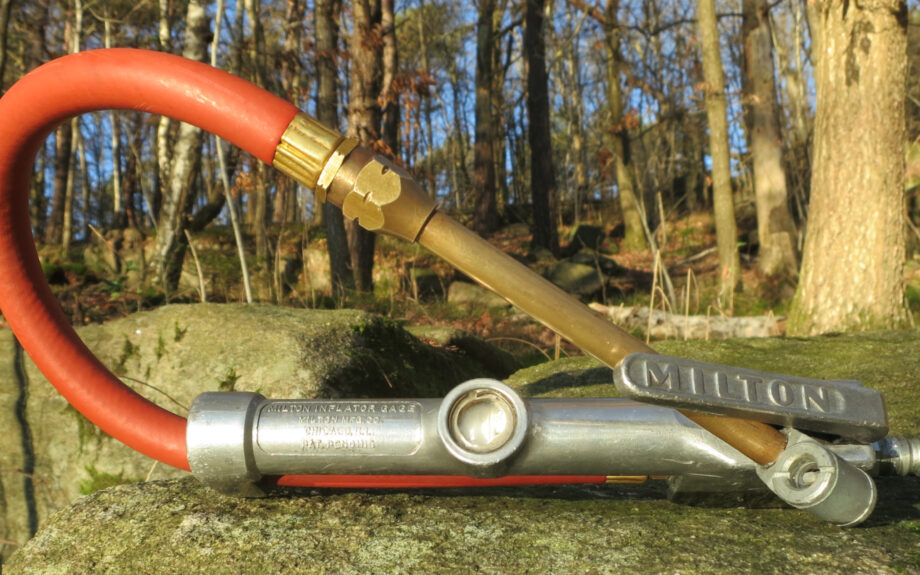
- Press the gauge firmly onto the valve stem. Push straight on until the hissing stops, then read the pressure. A digital or pencil gauge both work.
- Compare to your recommended PSI. If it’s low, add air; if it’s over, press the gauge pin to release a little.
- Add air if needed using a compressor or gas-station pump, checking again after each burst so you don’t overinflate.
- Recheck, then replace the valve caps and repeat for all four tires — and don’t forget the spare.
How often should you check tire pressure?
Check at least once a month and before long trips or heavy loads. If your dashboard’s tire-pressure warning light comes on, check right away — but still use a gauge, since the light often triggers only after pressure is already significantly low.
FAQ
What PSI should my tires be?
Use the number on the driver’s door-jamb sticker or in your owner’s manual — commonly 32–35 PSI for passenger cars. Don’t use the max PSI printed on the tire itself.
Should I check tire pressure hot or cold?
Cold — driven less than a mile or parked at least three hours. Warm tires read higher and can trick you into underinflating.
Can I drive with low tire pressure?
Briefly, to reach air, but low pressure hurts handling, fuel economy and tire life, and badly underinflated tires can fail. Inflate as soon as you can.